Argentine Visits to Pole
|
After the Argentine Navy successfully completed their flight to the South Pole [in January 1962] the Argentine Air Force attempted to duplicate the feat and reach the South Pole, on the first attempt (date unknown) their DC-3 caught fire on take-off; no lives were lost. The second and successful attempt was made by a DC-3 fitted with DC-4 engines and a jet propulsion unit located in the tail... Argentine Air Force Flies to South Pole The 800-mile flight from Belgrano took about 8 hours. The arrival of the two Beaver aircraft marked the first single-engine fixed-wing landings at Pole. The Beavers did not continue to McMurdo, but waited at Pole because of the cold (-60°F/-51°C) and joined the C-47 as it flew over Pole on the return flight to Sobral. 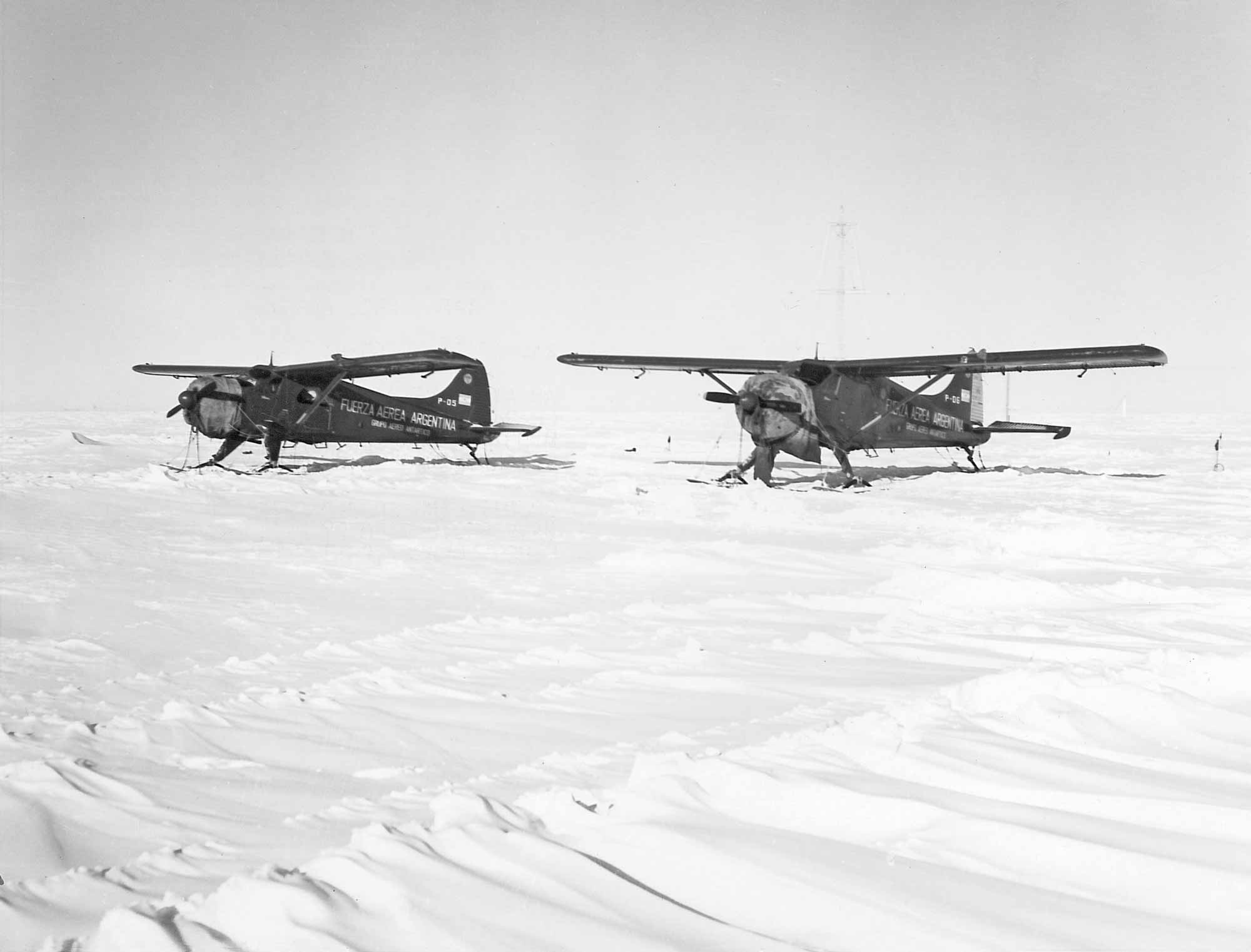 Above, the two Beaver aircraft at Pole, 16 November 1966. A U.S. Navy/NSF photo from the USAP Photo Library which is no longer online (my copy of the original). Later in the summer, an Argentine Army ground expedition arrived. This was Operación 90°, the first Argentine ground expedition to the South Pole, led by then-Colonel Jorge E. Leal. The venture was scientific, but it also was intended to confirm Argentina's claim to their segment of Antarctic territory...accordingly it was conducted with some measure of secrecy.  The ten-man round-trip traverse team (right, an undated trail photo) departed from Belgrano 1 (77º46'S-38º11'W) on 26 October with six Sno-Cats and a scouting team of 4 men with 18 dogs (who went as far as 83ºS). The traveled a meandering course across the Filchner Ice Shelf to Sobral (81º5'S-40º31ºW--Argentina's southernmost base). From there they proceeded straight south with (I believe) 3 Sno-Cats and reached Pole on 10 December. One comment on the trip by leader Jorge Leal was that the group encountered a radar operator from the United States who (since the secret visit was unannounced) asked them who they were and what they were doing there. After it was determined who they were, they were invited to dinner at Pole -- the first good food, said Leal, that the group had had in some weeks. | |
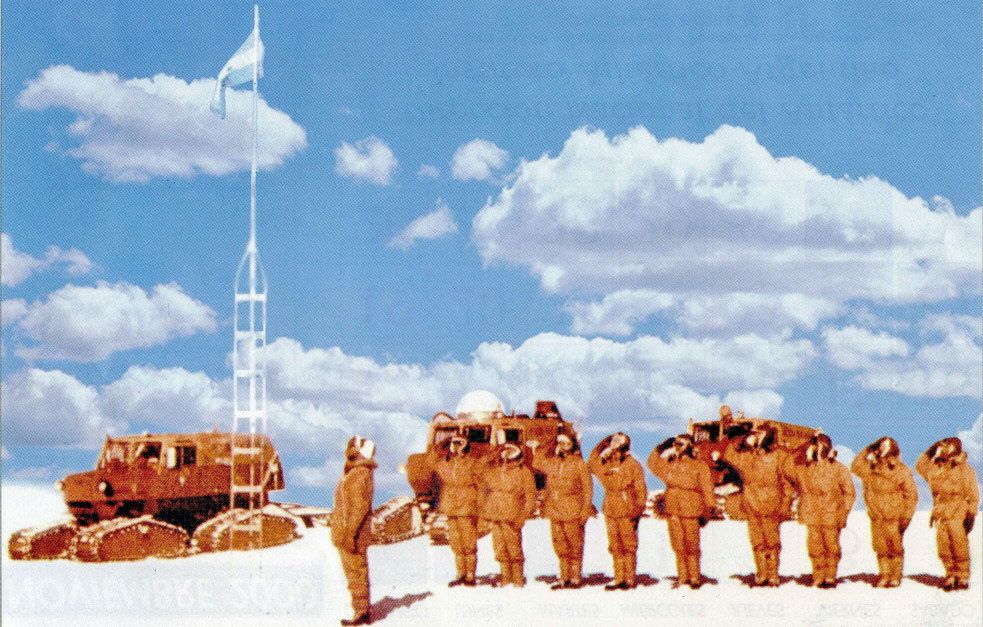 The ten-man team salutes the Argentine flag, with their Sno-Cats in the background (public domain photo by the Argentine Army from the Wikimedia Commons). |
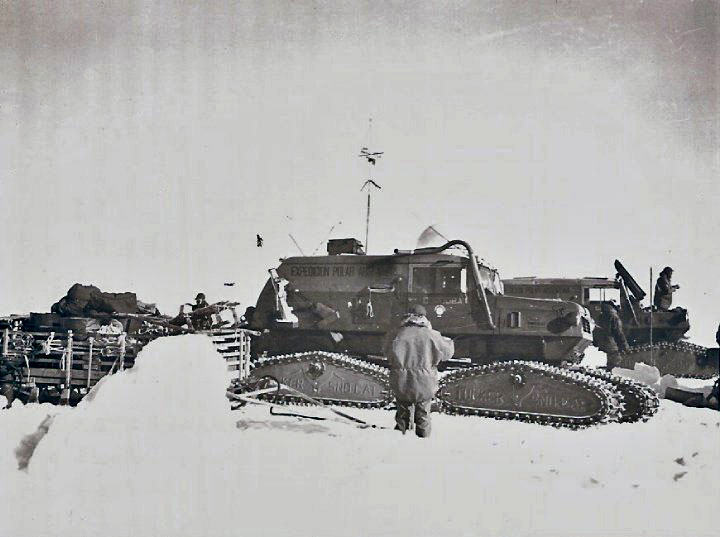
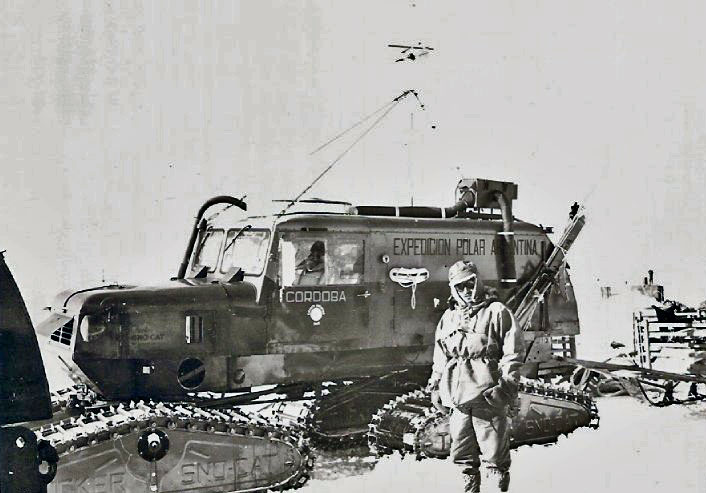 Here's a good view of one of the Argentine Army's Sno-Cats (and here's another photo of the other side of that vehicle and some of their other equipment). These photos are from 1966 Pole winterover Cesar Ambalada. |
|
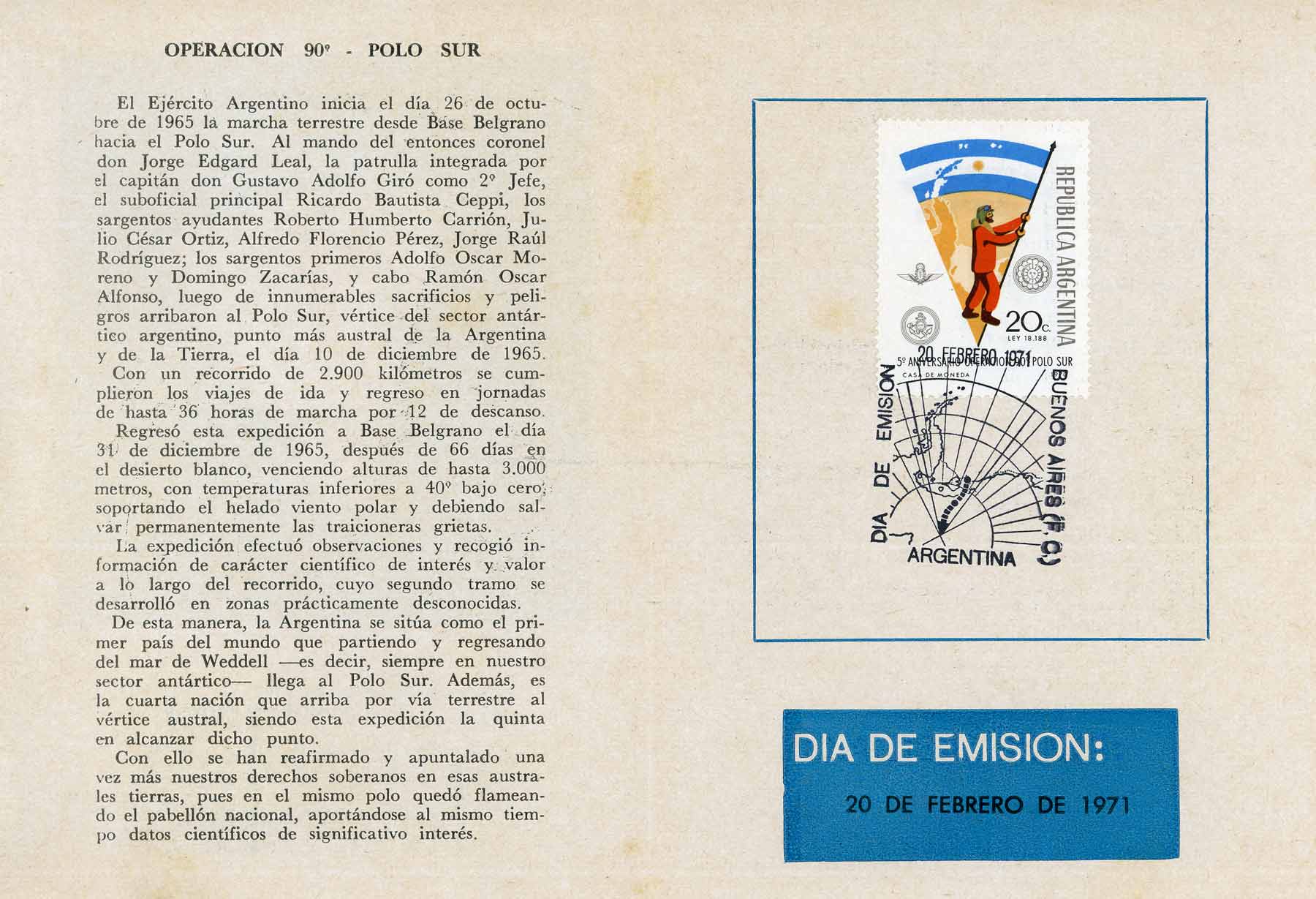
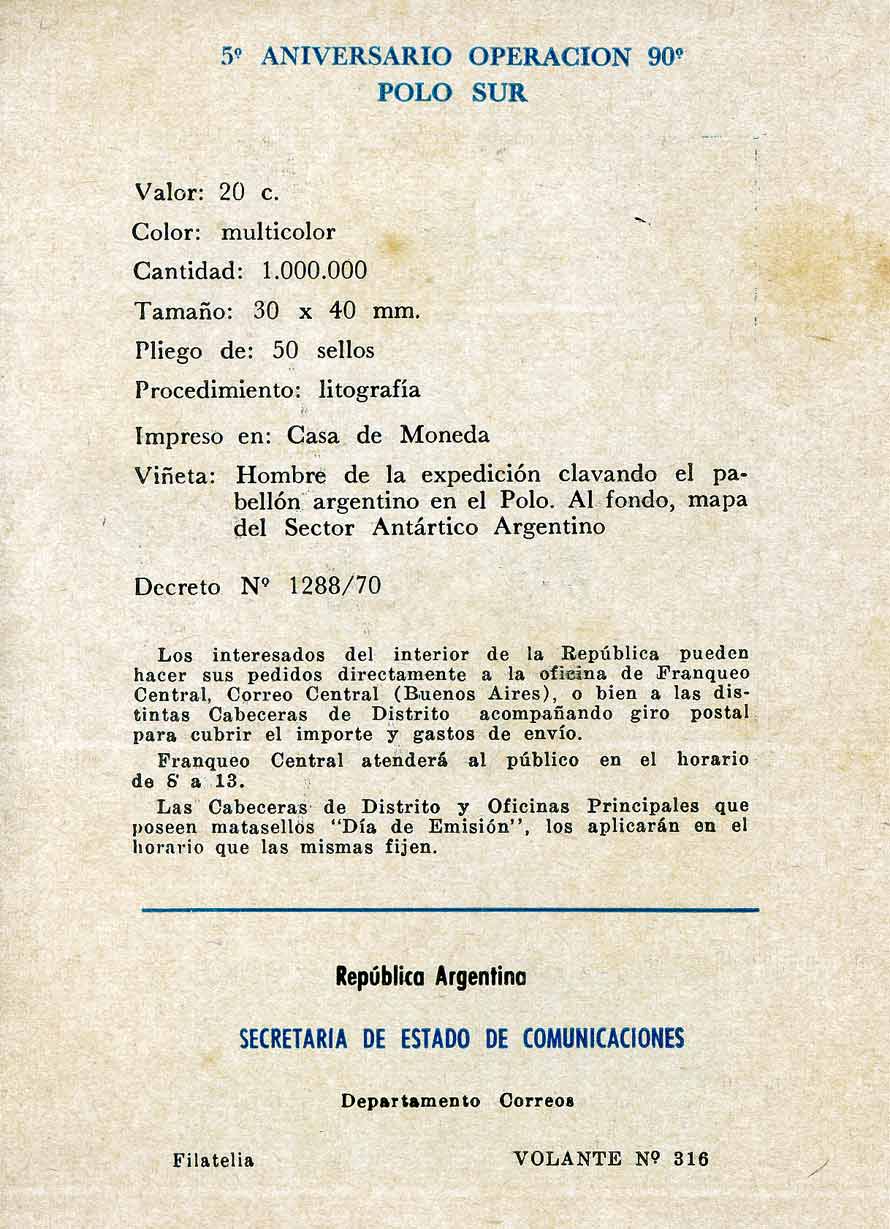
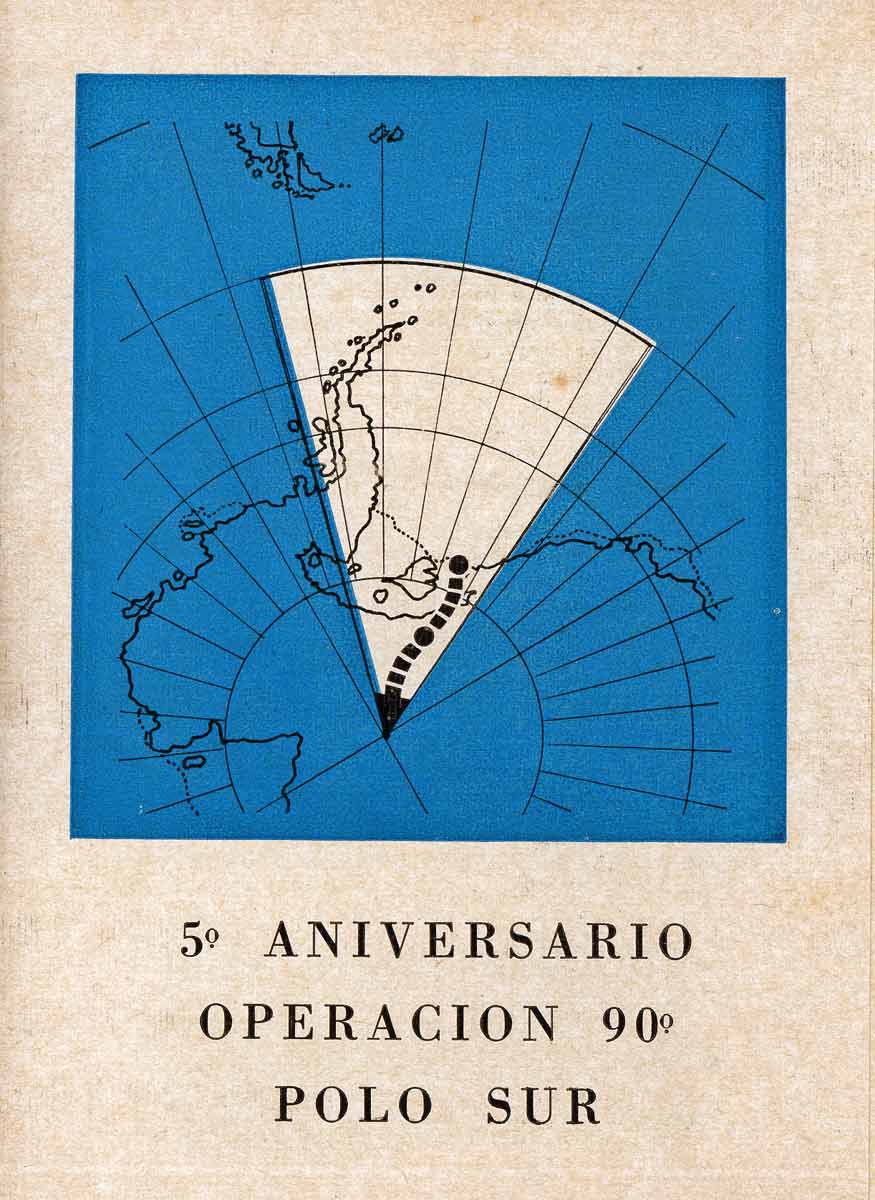
One detail not mentioned above...the distance covered. I've found conflicting information...the stamp cover document mentioned above, as well as A Chronology of Antarctic Exploration (Headland, 2009) describe the return distance as 2900 km (1802 miles); Col. Leal's report states the distance as 2980 km (1852 miles); Antarctic (the journal of the New Zealand Antarctic Society) March 1966 implies a significantly shorter distance, perhaps closer to the straight line distance, as depicted on the cover at left. The team photo above, as well as the cover/map at left, were shared by Luis Maidana. | |